
When the BIM model becomes a structured construction database, quantities and budgets stop being a manual, error-prone chore and become a direct output of the design itself.
The model as a construction database
A BIM model is far more than geometry. When every element carries consistent, structured information, the model turns into a centralized database that connects design, quantities, cost and decision-making in a single source of truth.
This is exactly where a classification standard like UNIFORMAT earns its place: it gives every component a shared, predictable language that both people and software can read.
Why UNIFORMAT
UNIFORMAT organizes a building by functional elements — substructure, shell, interiors, services — rather than by trade or material alone. That elemental breakdown mirrors how estimators and clients actually think about cost during the early and executive phases.
With a consistent classification in place, quantities can be grouped, filtered and compared across the whole project without rebuilding spreadsheets by hand.
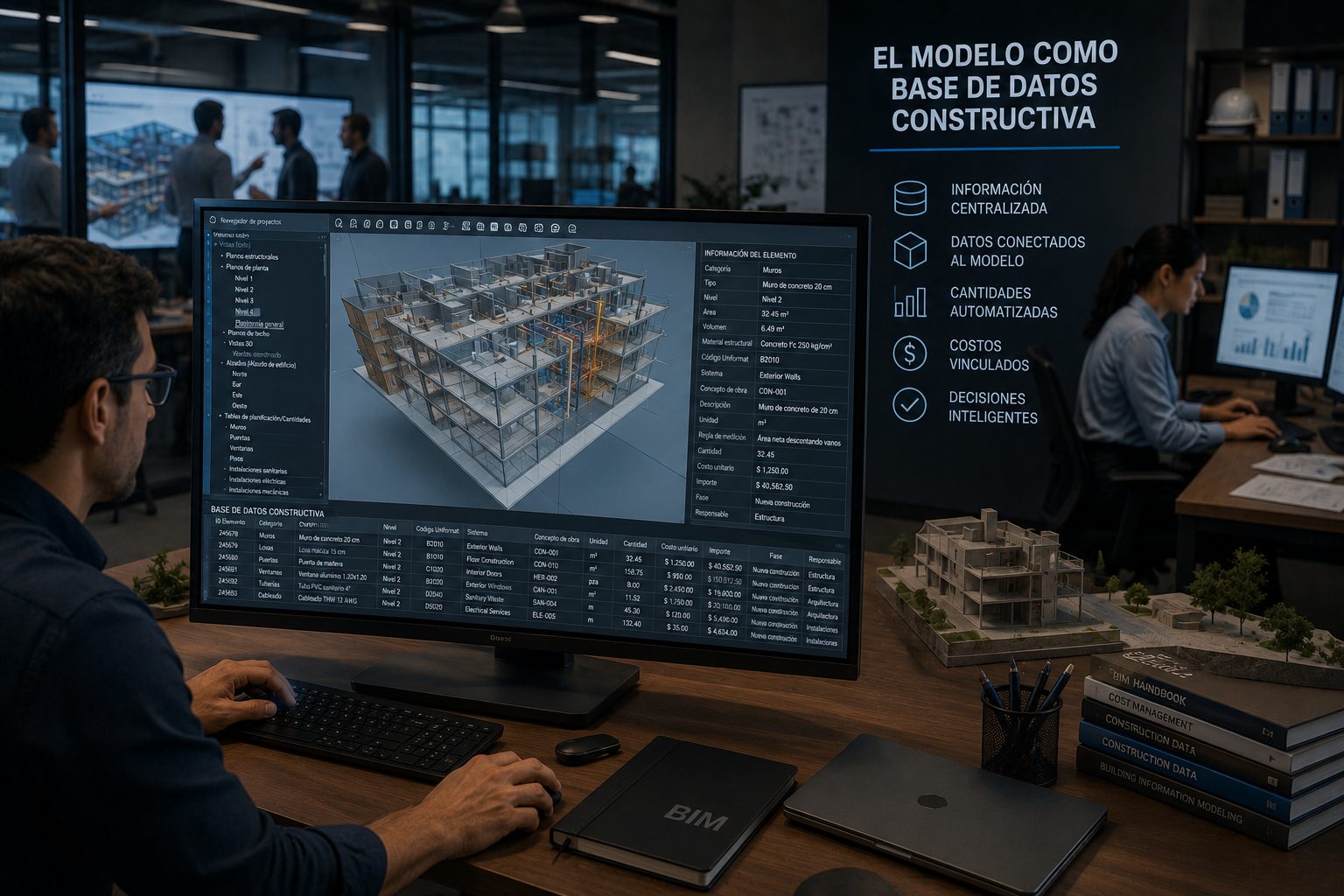
From geometry to automated quantities and cost
Once the classification is embedded, quantity take-offs are extracted automatically from the model. Concrete volumes, wall areas, door counts and linear runs are read directly from the elements, keeping the numbers synchronized with the latest design revision.
Linked to unit prices, those quantities feed a live cost estimate generated directly from the model — not typed into a spreadsheet after the fact.
Turning data into decisions
The real value is not the report; it is the speed and confidence with which decisions can be made. When a design change instantly updates quantities and cost, teams can weigh alternatives, control scope and protect the budget throughout the project.
That is the shift UNIFORMAT enables: from drawing a building to querying it.